
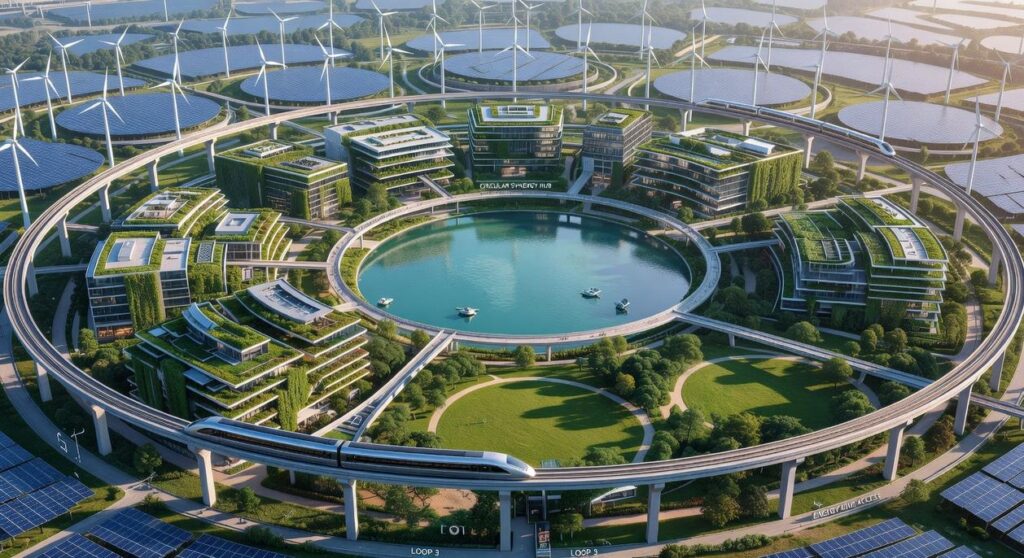
Staying ahead in today’s fast-moving financial landscape means understanding where innovation and capital intersect. If you’re searching for clarity on emerging opportunities, smarter portfolio strategies, and the forces shaping modern wealth creation, this article is designed to give you exactly that. We break down the fundamentals of capital finance, highlight actionable portfolio management hacks, and explore how green innovation trends are influencing long-term investment strategies.
Investors often struggle to separate meaningful signals from market noise. Our approach focuses on data-driven insights, practical financial frameworks, and carefully analyzed market developments to help you make informed decisions with confidence. By combining innovation alerts with time-tested wealth growth principles, we provide a clear view of what matters now—and what could matter next.
Whether you’re refining your portfolio or exploring new growth avenues, this guide delivers focused, research-backed insights aligned with your search for smarter capital allocation and sustainable financial progress.
The Convergence of Profit and Planet
I remember standing inside a humming battery storage facility in Nevada, watching rows of lithium-ion units blink like a sci‑fi set (yes, it felt a bit like The Matrix). That was the moment I realized sustainability isn’t charity—it’s strategy.
The landscape can feel overwhelming: carbon capture, grid-scale storage, regenerative agriculture. But capital flows tell a clearer story. According to the IEA, clean energy investment surpassed $1.7 trillion in 2023. That’s not hype—that’s momentum.
Some argue returns lag behind traditional sectors. Yet green innovation trends consistently show rising adoption rates and expanding margins.
AI-Driven Energy Optimization
Artificial intelligence is no longer a futuristic buzzword humming in tech labs; it’s the quiet brain behind modern power systems. In simple terms, AI refers to computer systems that learn from data and make decisions without constant human input. In energy, that means software that can “think” in milliseconds—balancing supply and demand so precisely you can almost hear the grid exhale.
Here’s how it works. Machine learning algorithms (systems that improve as they process more data) analyze weather patterns, historical consumption, and real-time grid activity. As a result, smart grids automatically reroute electricity, predict demand spikes, and adjust renewable output. When clouds roll in and solar dips, AI compensates before lights even flicker. According to the International Energy Agency, digital optimization could reduce grid losses by up to 15% (IEA).
Some critics argue traditional grid management works fine and that AI adds cyber risk. That’s fair—complexity can introduce vulnerabilities. However, clinging to analog systems in a digital world is like insisting on paper maps in the age of GPS (yes, even Batman upgraded). The scale of renewable integration demands faster, sharper coordination.
From a capital perspective, investors are pouring funds into AI-powered energy platforms aligned with green innovation trends. Pro tip: focus on firms delivering the software layer—asset-light, scalable, and often higher margin than power producers. In a market that hums, buzzes, and occasionally crackles with volatility, intelligence is becoming the ultimate infrastructure.
The Circular Economy’s Tech Backbone

We’re watching a quiet revolution unfold. The circular economy—an economic system designed to eliminate waste and continually reuse resources—is moving far beyond tossing bottles into blue bins. It’s about designing waste out of existence from the start. That’s a bold shift, and in my view, it’s long overdue.
Critics argue that full circularity is idealistic. They say scaling biodegradable polymers (plant-based plastics that naturally decompose) or advanced chemical recycling is too expensive. And yes, restoring plastics to “virgin state” quality through molecular breakdown processes isn’t cheap. But here’s my take: early costs often signal early opportunity. Solar once seemed impractical too (remember when rooftop panels were a novelty?). Now it’s mainstream (IEA, 2023).
New supply chain platforms—digital systems that track materials for reuse—are another backbone technology. Think of them as Fitbits for materials, monitoring where resources travel so they can re-enter production instead of landfills. Companies that treat waste as a resource reduce input volatility and unlock new revenue streams. That’s not theory; circular models can improve resource productivity by up to 3% annually (Ellen MacArthur Foundation).
From a wealth perspective, I believe green innovation trends are separating adaptive manufacturers from laggards. Material science breakthroughs in bio-based textiles and plastics could disrupt legacy production faster than many expect.
If you’re already thinking about exponential tech shifts, revisit the rise of quantum computing what it means for the future. Different field, same lesson: infrastructure defines advantage.
Precision Agriculture for a Greener Harvest
Agriculture is going high‑tech—and not in a sci‑fi, flying‑tractor way (though we’re getting close). Precision agriculture is the use of data, connected devices, and automation to grow more food with fewer inputs. In plain terms, farmers now rely on real‑time information instead of gut instinct.
Drones scan fields to detect crop stress before the human eye can see it. IoT (Internet of Things) sensors—devices that collect and transmit data—measure soil moisture and nutrient levels, triggering precise irrigation and fertilization. Vertical farming systems, which grow crops in stacked indoor layers, can reduce water use by up to 95% compared to traditional farming (FAO). That’s not incremental improvement—that’s transformational efficiency.
Skeptics argue AgriTech is expensive and inaccessible for small farmers. Fair point. Upfront costs can be steep. But as hardware prices fall and data platforms scale, adoption becomes more practical—much like solar panels did over the last decade (IEA). What once seemed niche is quickly becoming standard.
From a financial standpoint, food security is NON‑NEGOTIABLE. Demand rises with global population growth, projected to reach 9.7 billion by 2050 (UN). Companies enabling green innovation trends while reducing emissions and waste sit at the intersection of necessity and sustainability.
What’s next? Expect AI‑driven crop forecasting, carbon credit integration for farms, and autonomous machinery that cuts labor costs.
• CAPS
•
•
Investors looking ahead should ask: which platforms own the data layer—and who controls distribution? (That’s where durable value often hides.)
Next-Generation Energy Storage and Green Fuels
Renewable energy is booming—but there’s a catch. Solar and wind are intermittent, meaning they only produce power when the sun shines or the wind blows. That variability creates instability for power grids (and yes, blackouts are bad for business). The solution? Smarter storage and cleaner fuels.
Let’s clarify a few terms.
Solid-state batteries replace the liquid electrolyte in traditional lithium-ion batteries with a solid material. This makes them potentially safer, more energy-dense, and longer-lasting (at least in theory). Flow batteries, by contrast, store energy in liquid electrolytes held in external tanks—ideal for large-scale grid storage because they can discharge for hours.
Then there’s green hydrogen. Hydrogen becomes “green” when produced through electrolysis powered by renewables rather than fossil fuels. Electrolysis splits water into hydrogen and oxygen using electricity. When that electricity is clean, the fuel is too. According to the International Energy Agency, hydrogen demand could grow sixfold by 2050 in net-zero scenarios (IEA, 2023).
Critics argue hydrogen is inefficient and expensive compared to direct electrification. Fair point—battery-electric cars are more efficient than hydrogen vehicles. But sectors like steelmaking and shipping need extremely high heat or dense fuel, where batteries fall short.
From a portfolio standpoint:
- Early-stage battery chemistries offer asymmetric upside.
- Electrolyzer manufacturers sit at the heart of green innovation trends.
Pro tip: Watch policy incentives closely—subsidies often determine which technology scales first.
Building a resilient and sustainable portfolio requires more than good intentions; it demands alignment with green innovation trends reshaping global markets. According to the IEA, global investment in clean energy surpassed $1.7 trillion in 2023, outpacing fossil fuels. Meanwhile, AI-driven energy optimization can cut industrial power use by up to 20%, McKinsey reports. Add advances in the circular economy, AgriTech, and next-generation storage, and the data becomes clear. These sectors are scaling revenues, attracting capital, and outperforming legacy assets. Therefore, integrating them into your thesis isn’t ideological—it’s strategic risk management and a pathway to durable, compounding returns over the long-term.
Turn Insight Into Smart Capital Moves
You set out to better understand where innovation and capital markets are heading — and now you have a clearer view of how green innovation trends are reshaping investment priorities, risk models, and long-term wealth strategies.
The real challenge isn’t access to information. It’s knowing how to act on it before opportunities become crowded and expensive. Investors who hesitate often miss the upside, while those who align early with structural shifts position their portfolios for smarter, more resilient growth.
Now it’s your move. Start evaluating how your current portfolio aligns with emerging sustainable sectors, rebalance toward high-conviction innovation plays, and apply disciplined capital allocation principles to protect and compound your gains.
If you’re serious about building wealth in evolving markets, don’t rely on outdated strategies. Leverage proven portfolio management insights trusted by forward-thinking investors and take decisive action today. Review your strategy, adjust with intention, and put your capital where the next wave of growth is already forming.
 Founder & Chief Executive Officer (CEO)
Caelina Vaythanna is the kind of writer who genuinely cannot publish something without checking it twice. Maybe three times. They came to wealth growth perspectives through years of hands-on work rather than theory, which means the things they writes about — Wealth Growth Perspectives, Capital Investment Models, Expert Breakdowns, among other areas — are things they has actually tested, questioned, and revised opinions on more than once.
That shows in the work. Caelina's pieces tend to go a level deeper than most. Not in a way that becomes unreadable, but in a way that makes you realize you'd been missing something important. They has a habit of finding the detail that everybody else glosses over and making it the center of the story — which sounds simple, but takes a rare combination of curiosity and patience to pull off consistently. The writing never feels rushed. It feels like someone who sat with the subject long enough to actually understand it.
Outside of specific topics, what Caelina cares about most is whether the reader walks away with something useful. Not impressed. Not entertained. Useful. That's a harder bar to clear than it sounds, and they clears it more often than not — which is why readers tend to remember Caelina's articles long after they've forgotten the headline.
Founder & Chief Executive Officer (CEO)
Caelina Vaythanna is the kind of writer who genuinely cannot publish something without checking it twice. Maybe three times. They came to wealth growth perspectives through years of hands-on work rather than theory, which means the things they writes about — Wealth Growth Perspectives, Capital Investment Models, Expert Breakdowns, among other areas — are things they has actually tested, questioned, and revised opinions on more than once.
That shows in the work. Caelina's pieces tend to go a level deeper than most. Not in a way that becomes unreadable, but in a way that makes you realize you'd been missing something important. They has a habit of finding the detail that everybody else glosses over and making it the center of the story — which sounds simple, but takes a rare combination of curiosity and patience to pull off consistently. The writing never feels rushed. It feels like someone who sat with the subject long enough to actually understand it.
Outside of specific topics, what Caelina cares about most is whether the reader walks away with something useful. Not impressed. Not entertained. Useful. That's a harder bar to clear than it sounds, and they clears it more often than not — which is why readers tend to remember Caelina's articles long after they've forgotten the headline.