
If you’re searching for clarity on the latest clean energy breakthroughs, you’re likely trying to separate meaningful innovation from overhyped headlines—and understand what it actually means for capital allocation and long-term wealth growth. This article is designed to do exactly that.
We break down the most significant advancements shaping the energy transition, explain the financial fundamentals behind them, and highlight where real investment momentum is building. Rather than repeating press releases, we analyze underlying technology viability, funding patterns, and market scalability to help you see what’s practical, profitable, and positioned for durable impact.
Our insights draw on current innovation alerts, capital flow data, and established portfolio management principles to ensure you’re not just informed—but equipped to act strategically. By the end, you’ll have a clearer view of which developments warrant attention, how they fit into broader market trends, and how to evaluate opportunities with confidence.
Beyond Solar Panels: Where Smart Capital is Flowing in Green Energy
Solar gets the headlines Yet smart capital is moving elsewhere Many investors treat green energy as one monolithic trade That’s convenient—and wrong
First consider grid-scale storage—systems that store electricity for later use Lithium-ion dominates but venture money is flowing into long-duration storage like iron-air batteries which can deliver power for 100 hours (Form Energy 2023) Why Because intermittency—the stop-start nature of wind and solar—is the bottleneck
Meanwhile advanced transmission tech and AI-driven grid software are attracting funding These tools increase efficiency meaning more output without new generation
Skeptics argue only generation matters However history shows infrastructure wins wars—and portfolios Think picks and shovels
The opportunity in clean energy breakthroughs lies in scalability not hype
Solar’s Second Act: Innovations Driving Unprecedented Efficiency
I remember standing in a dusty utility field in Arizona, staring at rows of conventional panels and thinking, this can’t be the endgame. The installer beside me shrugged and said efficiency gains were “incremental now.” He was wrong.
Perovskite solar cells (PSCs)—a next‑gen material that converts light to electricity using a crystalline structure—are attracting massive capital because they promise dramatically lower manufacturing costs. Unlike traditional silicon, PSCs can be printed in thin layers on flexible or even transparent surfaces. Think solar windows on skyscrapers or curved panels on electric vehicles (yes, Tony Stark vibes). The catch? Durability. PSCs degrade faster under heat and moisture. The commercialization race is about stabilizing them for 20+ year lifespans.
Then there are tandem silicon‑perovskite cells, stacking two materials to capture more of the light spectrum. This hybrid design has surpassed the 30% efficiency barrier in lab settings (National Renewable Energy Laboratory data). Consider it a portfolio hack: back firms retrofitting existing silicon infrastructure rather than rebuilding from scratch.
Finally, bifacial solar panels absorb light from both sides. Financial models show 10–20% higher energy yield in large-scale farms (International Renewable Energy Agency reports), which explains private equity’s interest. More yield, same land, better IRR.
Three trends worth watching:
- Stability breakthroughs in PSC coatings
- Retrofits for existing farms
- Utility-scale bifacial deployments
Skeptics argue costs and scale remain hurdles. Fair. But so did lithium-ion batteries—until they weren’t. This wave of clean energy breakthroughs feels similar.
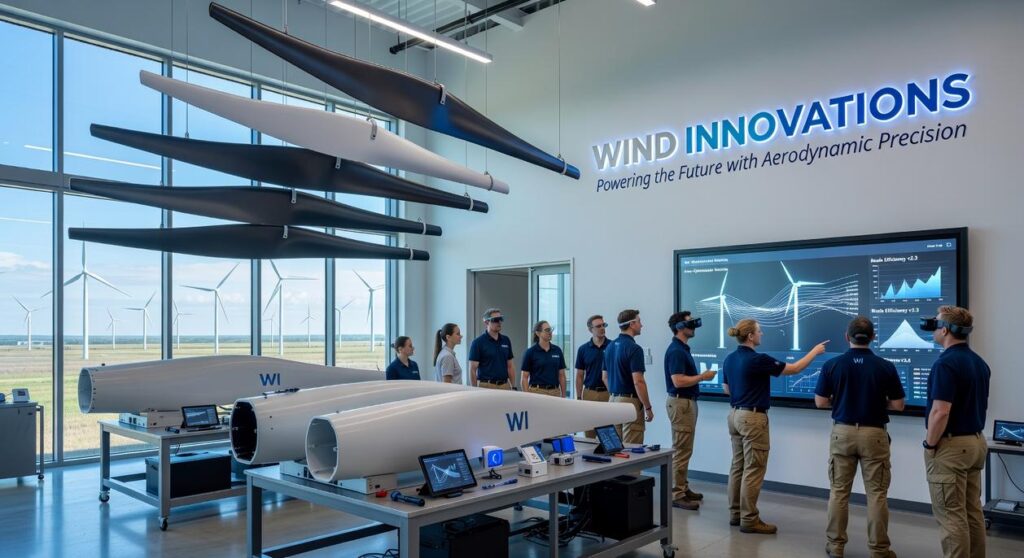
The New Giants: Breakthroughs in Wind Power Generation
Floating Offshore Wind Farms
For years, critics argued offshore wind was limited to shallow waters like the North Sea’s Dogger Bank. Floating offshore wind farms changed that. By mounting turbines on semi-submersible platforms tethered to the seabed, developers can now tap deep-water wind resources off California’s Humboldt Bay and Japan’s Akita coast. These projects are capital-intensive (think billions in upfront capex), which is why large infrastructure funds and sovereign investors dominate early rounds. Skeptics point to high installation costs and mooring-line fatigue. Fair. But engineering advances in dynamic cabling and port-side assembly are steadily reducing risk—and unlocking serious clean energy breakthroughs.
Direct Drive Turbine Technology
Traditional turbines rely on gearboxes to convert low-speed rotor motion into high-speed generation. Direct drive systems eliminate the gearbox entirely. Fewer moving parts mean lower failure rates—critical 40 miles offshore where maintenance vessels cost six figures per trip (National Renewable Energy Laboratory). Some argue permanent magnet generators are heavier and pricier. True, upfront. But improved reliability boosts long-term asset value.
AI-Powered Wind Farm Optimization
Using predictive analytics, operators adjust blade pitch and yaw in real time based on SCADA data and mesoscale wind models. The result? Higher capacity factors and reduced wear (International Energy Agency). Detractors call it incremental. Yet like Moneyball for megawatts, software-driven optimization delivers high-margin gains. For more on adjacent innovation waves, see the rise of quantum computing and its business impact.
Enhanced Geothermal Systems (EGS) take drilling and hydraulic fracturing techniques perfected in oil and gas and apply them to hot dry rock. By injecting water to create permeable reservoirs, developers can generate steady, 24/7 electricity almost anywhere. That baseload reliability makes EGS a serious competitor to coal and nuclear (yes, really). Critics argue costs and seismic risks remain barriers. Fair. But pilot projects backed by major energy corporations show learning curves similar to shale’s early days. My recommendation: watch companies securing long-term power purchase agreements before scaling.
Closed-loop geothermal takes a different approach. Instead of fracturing rock, it circulates fluid through sealed underground pipes, minimizing environmental impact. Think of it as a giant subterranean radiator. Because it avoids induced seismicity, it appeals to ESG-focused funds and property developers. It scales from commercial campuses to residential districts, making it one of the more practical clean energy breakthroughs emerging today. If you’re allocating capital, prioritize firms with modular, repeatable designs.
Green hydrogen’s bottleneck is electrolyzer cost. Traditional systems rely on expensive platinum-group catalysts. New materials—nickel-iron, iridium-thrifting membranes, and solid-oxide designs—are cutting costs and boosting efficiency. As renewable power prices fall, green hydrogen approaches fossil-based parity, unlocking heavy transport and steelmaking. Consider:
- Focus on electrolyzer manufacturers with strategic industrial partnerships.
- Track regions offering production tax credits or contracts-for-difference.
- Favor balance sheets that can withstand commodity volatility.
Positioning matters.
The Linchpin of the Revolution: Energy Storage and Grid Modernization
Energy storage is the hinge between renewable ambition and grid reality.
Solid-state batteries vs. flow batteries is the debate shaping clean energy breakthroughs.
| Feature | Solid-State Batteries | Flow Batteries |
|---|---|---|
| Best Use | High-density, modular storage |
Long-duration (8+ hrs) storage |
| Advantage | Safety + compact footprint | Stable, scalable discharge |
| Investment Theme | Startup “space race” | Industrial infrastructure buildout |
Solid-state batteries promise higher energy density (more power in less space) and lower fire risk—ideal for urban grids. Critics argue costs remain high and commercialization timelines uncertain. Fair. But capital inflows suggest investors expect breakthroughs soon.
Flow batteries, by contrast, win on duration and durability. Some say they’re bulky; true—but for grid stability, reliability beats sleek design (this isn’t a smartphone launch).
Layer in smart grids—AI + IoT optimizing load in real time—and software becomes the quiet multiplier.
We’ve seen the future of energy isn’t one silver-bullet technology, but a mesh of generation and storage plays. Yet investors often treat it as Solar vs. Hydrogen or Batteries vs. Grid upgrades. That’s a false choice.
Portfolio A: chase headlines about clean energy breakthroughs without checking balance sheets. Portfolio B: compare durability data on perovskites with manufacturing scale, or green hydrogen costs with offtake contracts. The difference? A rides hype; B tracks cash flow and scalability.
Admittedly, some argue diversification dilutes returns. However, ignoring financial viability is riskier. So, evaluate exposure sub-sector by sub-sector, following capital as closely as science.
Turning Insight Into Action
You came here to better understand how innovation trends, capital finance fundamentals, and portfolio strategies connect to real wealth growth. Now you have a clearer view of how clean energy breakthroughs and emerging opportunities can reshape markets—and your portfolio.
The real challenge isn’t lack of information. It’s knowing what to focus on and how to act before opportunities pass you by. Markets move fast. Capital flows shift. Without a structured approach, it’s easy to feel uncertain about your next move.
Here’s the opportunity: apply what you’ve learned. Audit your current portfolio. Rebalance toward sectors aligned with long-term innovation. Tighten your capital allocation strategy. Small, informed adjustments today can compound into significant gains tomorrow.
If you’re serious about cutting through noise and building a smarter, growth-focused portfolio, now is the time to act. Join the thousands of investors who rely on our proven insights and practical wealth-building strategies to stay ahead. Start implementing these strategies today and position your capital where the future is being built.
 Chief Investment Strategist
Darrin Melvinevo is the kind of writer who genuinely cannot publish something without checking it twice. Maybe three times. They came to wealth growth perspectives through years of hands-on work rather than theory, which means the things they writes about — Wealth Growth Perspectives, Expert Breakdowns, Innovation Alerts, among other areas — are things they has actually tested, questioned, and revised opinions on more than once.
That shows in the work. Darrin's pieces tend to go a level deeper than most. Not in a way that becomes unreadable, but in a way that makes you realize you'd been missing something important. They has a habit of finding the detail that everybody else glosses over and making it the center of the story — which sounds simple, but takes a rare combination of curiosity and patience to pull off consistently. The writing never feels rushed. It feels like someone who sat with the subject long enough to actually understand it.
Outside of specific topics, what Darrin cares about most is whether the reader walks away with something useful. Not impressed. Not entertained. Useful. That's a harder bar to clear than it sounds, and they clears it more often than not — which is why readers tend to remember Darrin's articles long after they've forgotten the headline.
Chief Investment Strategist
Darrin Melvinevo is the kind of writer who genuinely cannot publish something without checking it twice. Maybe three times. They came to wealth growth perspectives through years of hands-on work rather than theory, which means the things they writes about — Wealth Growth Perspectives, Expert Breakdowns, Innovation Alerts, among other areas — are things they has actually tested, questioned, and revised opinions on more than once.
That shows in the work. Darrin's pieces tend to go a level deeper than most. Not in a way that becomes unreadable, but in a way that makes you realize you'd been missing something important. They has a habit of finding the detail that everybody else glosses over and making it the center of the story — which sounds simple, but takes a rare combination of curiosity and patience to pull off consistently. The writing never feels rushed. It feels like someone who sat with the subject long enough to actually understand it.
Outside of specific topics, what Darrin cares about most is whether the reader walks away with something useful. Not impressed. Not entertained. Useful. That's a harder bar to clear than it sounds, and they clears it more often than not — which is why readers tend to remember Darrin's articles long after they've forgotten the headline.