
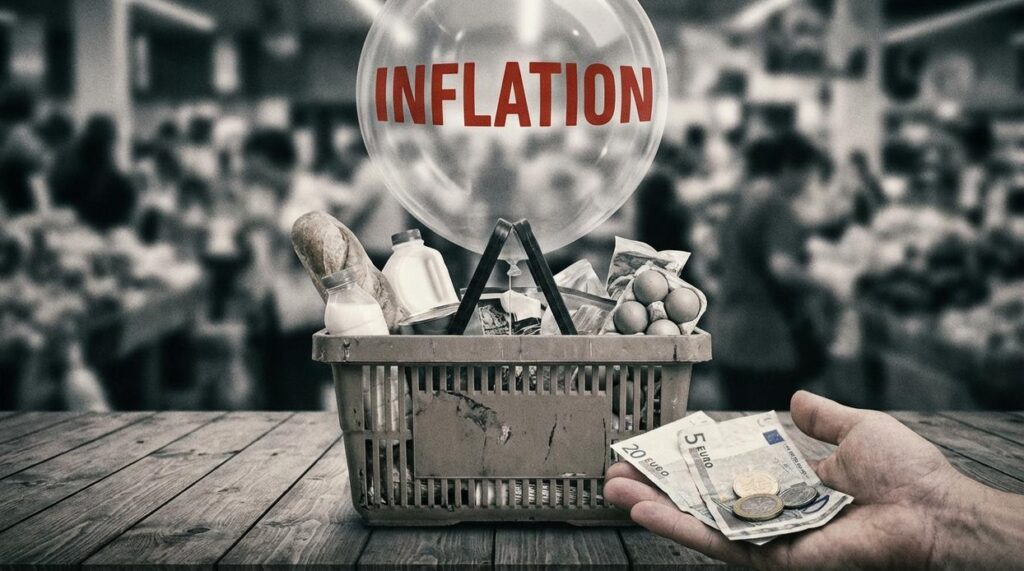
If you’re searching for clear, practical insight into inflation causes and effects, you’re likely trying to understand how rising prices impact your savings, investments, and long-term financial plans. Inflation isn’t just an economic headline—it directly influences purchasing power, interest rates, asset values, and portfolio performance.
This article breaks down inflation causes and effects in a straightforward, actionable way. We’ll examine what actually drives inflation—from monetary policy shifts to supply chain disruptions—and how those forces ripple through markets, consumer behavior, and wealth-building strategies. More importantly, we’ll explore what these changes mean for your financial decisions today.
To ensure accuracy and relevance, this analysis draws on established economic research, central bank data, and insights from financial market specialists who track macroeconomic trends closely. By the end, you’ll have a clear understanding of inflation causes and effects—and the knowledge to respond strategically rather than react emotionally.
Why Understanding Inflation Pays Off
Inflation feels abstract until groceries jump and rent climbs. At its core, inflation happens when demand outpaces supply, production costs rise, or governments expand the money supply (see Federal Reserve explanations). Knowing these drivers isn’t trivia; it PROTECTS your purchasing power. When you grasp inflation causes and effects, you can adjust budgets, negotiate salaries, and rebalance investments toward assets that historically hedge rising prices, like equities or TIPS. Some argue inflation is purely cyclical and self-correcting. Sometimes. But informed decisions today mean fewer surprises tomorrow—and more control over your financial future for you and yours.
The Demand Engine: When Too Much Money Chases Too Few Goods
I remember trying to buy a used car in 2021. The dealer laughed—politely—when I asked for a discount. “Inventory’s thin,” he said. Prices weren’t just firm; they were climbing by the week. That was my front-row seat to demand-pull inflation—when demand (how much people want to buy) outpaces supply (how much producers can offer), pushing prices higher.
At its core, demand-pull inflation happens when too much money chases too few goods. Think of it like concert tickets: if 50,000 fans want 10,000 seats, prices surge (Taylor Swift fans know the drill).
One major trigger is monetary policy—the tools central banks use to manage the economy. When interest rates are lowered and the money supply expands, borrowing becomes cheaper. Businesses invest. Consumers spend. That extra cash doesn’t sit still; it moves markets.
Then there’s fiscal stimulus and consumer confidence:
- Government stimulus checks increase disposable income.
- Strong job markets boost spending optimism.
- Businesses struggle to scale production quickly.
The result? Inflation causes and effects ripple outward—higher input costs, rising wages, and tighter household budgets.
Some argue this growth is healthy—and it can be. But when supply can’t catch up, price stability becomes the trade-off.
The Supply Shock: When It Costs More to Make and Move Everything

Cost-push inflation happens when rising production costs force businesses to increase prices to protect profit margins. Instead of demand overheating the economy, the problem starts on the supply side. A clear example: in 2022, global energy prices surged after Russia’s invasion of Ukraine, pushing Brent crude oil above $120 per barrel (U.S. Energy Information Administration). Higher fuel costs rippled through transportation, manufacturing, and food production.
Key drivers include:
- Rising input costs (raw materials like steel, wheat, or semiconductors)
- Energy price spikes that increase shipping and factory expenses
- Supply chain bottlenecks that delay goods and raise freight rates
During the pandemic, container shipping costs from Asia to the U.S. West Coast jumped over 300% compared to pre-2020 levels (Freightos Baltic Index). Companies passed those costs on to consumers—because absorbing them would erase profits (and shareholders rarely applaud shrinking margins).
Then there’s the wage-price spiral—when workers demand higher wages to keep up with rising prices. Businesses respond by raising prices further, reinforcing the cycle. The 1970s U.S. inflation episode is a classic case study cited by the Federal Reserve.
Understanding inflation causes and effects helps investors anticipate market reactions. For deeper context, see how central banks influence financial markets explained.
The Everyday Impact: How Inflation Erodes Your Purchasing Power
Inflation is often called the “silent tax,” and in my view, that’s not dramatic—it’s accurate. When prices rise faster than your savings grow, your money quietly loses strength. If inflation averages 3% annually, $10,000 today will only have the purchasing power of about $7,400 in 10 years (U.S. Bureau of Labor Statistics data). That difference isn’t visible on your bank statement, but it’s very real at checkout.
Then there’s the household budget squeeze. Groceries creep up. Gas spikes. Rent renewals sting. Utilities edge higher. Over time, families are forced to swap brands, delay purchases, or dip into savings. Some argue modest inflation is healthy because it signals economic growth. Fair point. But when wage growth lags behind price increases, “healthy” feels irrelevant at the dinner table.
Now, the two sides of debt. On one hand, inflation helps borrowers with fixed-rate loans. If your mortgage payment stays the same while your income rises, you’re repaying that loan with cheaper dollars. On the other hand, new borrowing becomes more expensive as lenders raise rates to offset inflation causes and effects. Credit cards, auto loans, and new mortgages suddenly cost more.
In my opinion, ignoring inflation is like ignoring a slow leak in your roof (fine…until it isn’t). The impact builds quietly—then all at once.
The Portfolio Challenge: Navigating Investments in an Inflationary Era
Inflation reshapes portfolios in ways most headlines oversimplify. Cash and fixed-income bonds, for example, often lose purchasing power as prices rise (the silent tax nobody votes for). Real assets—like real estate and commodities—tend to hold value better because their prices adjust alongside rising costs. Equities can be selective hedges, particularly companies with strong pricing power, meaning their ability to raise prices without losing customers (think Apple adjusting iPhone prices without empty stores).
But here’s the counterpoint: some argue equities always beat inflation. History complicates that claim. During the 1970s stagflation era, the S&P 500 delivered negative real returns for years (Federal Reserve data). Pricing power matters more than broad market exposure.
What competitors rarely highlight is the operational layer beneath asset performance. Inflation creates uncertainty inside businesses—forcing leaders to rethink inventory cycles, renegotiate supplier contracts, and delay capital expenditures. The ripple effects of inflation causes and effects are strategic, not just statistical.
- Companies that invest in process automation during cost spikes often emerge with structurally higher margins.
Inflation can also spark innovation. When input costs surge, firms pursue efficiency technologies, alternative materials, and smarter logistics. Pro tip: watch R&D spending during inflationary periods—it often signals who’s building advantage rather than merely surviving (OECD innovation reports).
From demand-side surges to supply-chain shocks, inflation is rarely driven by a single force. Instead, it reflects intertwined pressures that reshape prices, wages, and expectations. The real danger, however, is its quiet erosion of purchasing power and long-term returns—what $100 buys today may not tomorrow. In other words, ignoring inflation causes and effects leaves portfolios exposed. Therefore, clarity becomes your first line of defense. With disciplined asset allocation, inflation-aware securities, and periodic rebalancing, investors can adapt as cycles shift. Ultimately, proactive planning—rather than reactive scrambling—positions you to preserve capital and capture opportunity, even in volatile economies over time ahead consistently.
Take Control of Inflation Before It Controls You
You came here to better understand inflation causes and effects—and now you have a clearer picture of what’s driving rising prices and how they quietly erode purchasing power, savings, and long-term wealth.
Inflation isn’t just an economic headline. It directly impacts your portfolio returns, cash flow stability, and future financial security. Ignoring it can mean watching your hard-earned money lose value year after year.
The good news? You’re no longer in the dark. By recognizing the patterns behind inflation causes and effects, you’re positioned to make smarter allocation decisions, hedge strategically, and protect your wealth from unnecessary risk.
Now it’s time to act.
Review your portfolio. Identify assets vulnerable to inflation pressure. Rebalance toward strategies designed to preserve and grow purchasing power. If you want proven insights, practical portfolio management hacks, and trusted guidance on capital fundamentals, start applying these strategies today.
Don’t let inflation dictate your financial future. Take control now and put your money to work in ways that outpace rising costs.
 Chief Investment Strategist
Darrin Melvinevo is the kind of writer who genuinely cannot publish something without checking it twice. Maybe three times. They came to wealth growth perspectives through years of hands-on work rather than theory, which means the things they writes about — Wealth Growth Perspectives, Expert Breakdowns, Innovation Alerts, among other areas — are things they has actually tested, questioned, and revised opinions on more than once.
That shows in the work. Darrin's pieces tend to go a level deeper than most. Not in a way that becomes unreadable, but in a way that makes you realize you'd been missing something important. They has a habit of finding the detail that everybody else glosses over and making it the center of the story — which sounds simple, but takes a rare combination of curiosity and patience to pull off consistently. The writing never feels rushed. It feels like someone who sat with the subject long enough to actually understand it.
Outside of specific topics, what Darrin cares about most is whether the reader walks away with something useful. Not impressed. Not entertained. Useful. That's a harder bar to clear than it sounds, and they clears it more often than not — which is why readers tend to remember Darrin's articles long after they've forgotten the headline.
Chief Investment Strategist
Darrin Melvinevo is the kind of writer who genuinely cannot publish something without checking it twice. Maybe three times. They came to wealth growth perspectives through years of hands-on work rather than theory, which means the things they writes about — Wealth Growth Perspectives, Expert Breakdowns, Innovation Alerts, among other areas — are things they has actually tested, questioned, and revised opinions on more than once.
That shows in the work. Darrin's pieces tend to go a level deeper than most. Not in a way that becomes unreadable, but in a way that makes you realize you'd been missing something important. They has a habit of finding the detail that everybody else glosses over and making it the center of the story — which sounds simple, but takes a rare combination of curiosity and patience to pull off consistently. The writing never feels rushed. It feels like someone who sat with the subject long enough to actually understand it.
Outside of specific topics, what Darrin cares about most is whether the reader walks away with something useful. Not impressed. Not entertained. Useful. That's a harder bar to clear than it sounds, and they clears it more often than not — which is why readers tend to remember Darrin's articles long after they've forgotten the headline.