
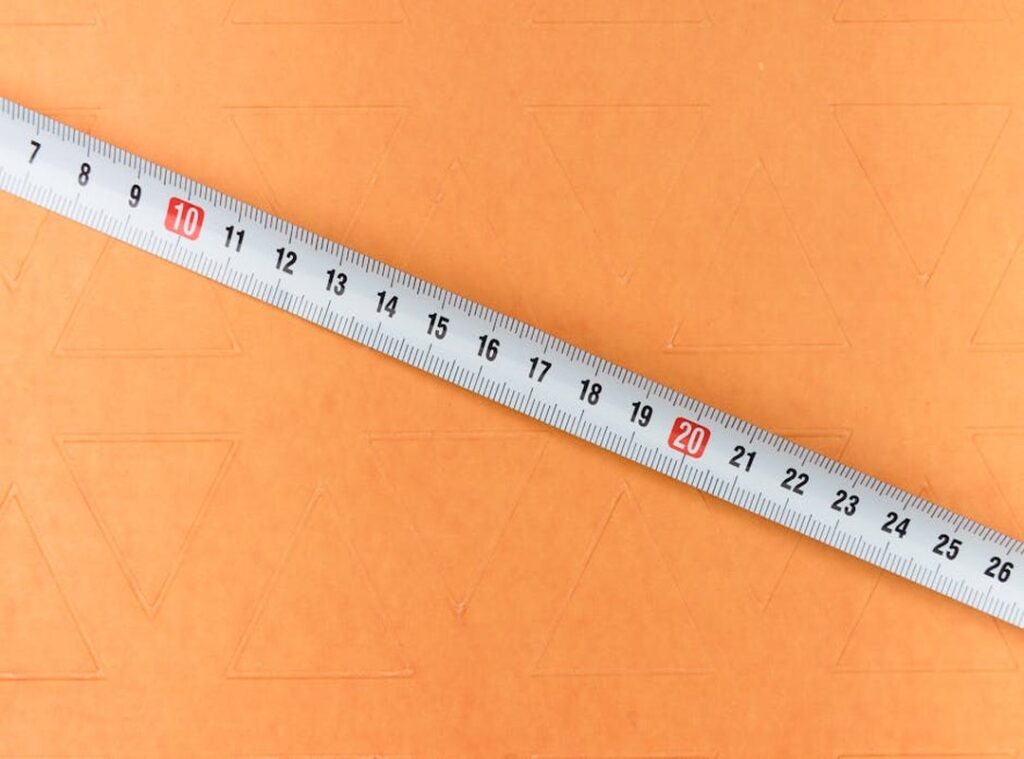
71 inches is equal to 180.34 centimeters.
You need a quick, no-nonsense conversion, right? Whether you’re shopping online, working on a DIY project, or just trying to understand height measurements, I get it.
This article will give you the answer and show you the simple formula to do the conversion yourself.
I’ll also throw in a handy conversion chart and some real-world examples to help you visualize it better.
Accuracy and clarity are key here. You can trust that you have the correct information.
The Simple Formula to Convert Inches to Centimeters
When it comes to converting inches to centimeters, there’s a universal conversion factor: 1 inch = 2.54 centimeters. This is an internationally agreed-upon standard.
Here’s how you can do the calculation:
- Take the number of inches.
- Multiply that number by 2.54.
- The result is the measurement in centimeters.
For example, if you have 71 inches, the calculation would be:
71 inches × 2.54 = 180.34 cm.
Using the precise 2.54 value is crucial for accuracy, especially in technical fields or construction. Rounding to 2.5 can lead to significant errors over larger measurements.
If you need to convert the other way, from centimeters to inches, the formula is:
Centimeters ÷ 2.54 = Inches.
Think of this formula like a recipe. Just as following a recipe gives you the same result every time, using this formula will give you the correct conversion no matter what the measurement is.
What Does 71 Inches Look Like in the Real World?
When you hear 71 inches, it might sound like just another number. But let’s make it real.
71 inches is 5 feet 11 inches, a common height for an adult male.
Imagine standing next to someone that tall. It’s a pretty average height, right?
Now, think about your living room. A 71-inch length is typical for a small sofa or a loveseat.
It’s also the height of a tall bookshelf. So, if you’re planning to buy one, picture it reaching up to your chest or even your shoulders.
In the world of electronics, while 71 inches isn’t a direct screen measurement, it’s a common width for an entertainment center.
This size can comfortably hold a large TV and all your gadgets.
For DIY enthusiasts, 71 inches could be the length of a piece of lumber for a workbench.
Or, if you’re into sewing, it’s a good length for a cut of fabric for curtains.
To give you another visual cue, 71 inches is roughly the width of a standard refrigerator placed on its side.
If you need a metric conversion, 71 inches is about 180.34 cm.
So, next time you see 71 inches, you’ll have a better idea of what it looks like in the real world.
Quick-Reference Conversion Chart: Inches to CM
When you need to convert inches to centimeters and don’t have a calculator, this chart is your go-to. It’s especially handy for comparing clothing sizes or checking luggage dimensions.
| Inches (in) | Centimeters (cm) |
|---|---|
| 65 | 165.10 |
| 66 | 167.64 |
| 67 | 170.18 |
| 68 | 172.72 |
| 69 | 175.26 |
| 70 | 177.80 |
| 71 | 180.34 |
| 72 | 182.88 |
| 73 | 185.42 |
| 74 | 187.96 |
| 75 | 190.50 |
To use the chart, find the inch measurement in the left column, then look at the corresponding centimeter value on the right. Simple as that.
This chart is super useful when you’re shopping online and need to compare US sizes to European ones. Or if you’re packing for an international trip and need to make sure your luggage meets the size requirements.
I recommend bookmarking this page for quick access. You never know when you’ll need to do a quick conversion.
If you want more tips and insights, check out Onpresscapital. They’ve got a lot of great resources.
Common Conversion Mistakes and How to Avoid Them

When converting measurements, one of the most common errors is using an incorrect conversion factor. For example, rounding 2.54 down to 2.5 can lead to significant inaccuracies, especially with larger measurements.
Another frequent mistake is accidentally transposing numbers. You might type 17 instead of 71. Always double-check your input to avoid this.
Confusion between fractional and decimal inches is also a big issue. It’s easier to convert fractions to decimals first. This way, you can handle the calculation more smoothly.
Always write down the units you are converting from and to. This ensures you apply the formula in the right direction.
For instance, if you’re converting 71inch to cm, make sure you know the correct factor and direction. Simple steps like these can save you a lot of trouble.
Making Any Measurement Conversion with Confidence
Converting 71 inches to cm is straightforward when you know the formula (multiply by 2.54), resulting in 180.34 cm. Understanding the formula is more powerful than just looking up one answer, as it can be applied to any measurement. This knowledge can help you in various practical contexts, such as measuring for a DIY project or finding the right clothing size.
Tackle your next measurement task with confidence, whether it’s for a project, shopping, or simple curiosity.
 Founder & Chief Executive Officer (CEO)
Caelina Vaythanna is the kind of writer who genuinely cannot publish something without checking it twice. Maybe three times. They came to wealth growth perspectives through years of hands-on work rather than theory, which means the things they writes about — Wealth Growth Perspectives, Capital Investment Models, Expert Breakdowns, among other areas — are things they has actually tested, questioned, and revised opinions on more than once.
That shows in the work. Caelina's pieces tend to go a level deeper than most. Not in a way that becomes unreadable, but in a way that makes you realize you'd been missing something important. They has a habit of finding the detail that everybody else glosses over and making it the center of the story — which sounds simple, but takes a rare combination of curiosity and patience to pull off consistently. The writing never feels rushed. It feels like someone who sat with the subject long enough to actually understand it.
Outside of specific topics, what Caelina cares about most is whether the reader walks away with something useful. Not impressed. Not entertained. Useful. That's a harder bar to clear than it sounds, and they clears it more often than not — which is why readers tend to remember Caelina's articles long after they've forgotten the headline.
Founder & Chief Executive Officer (CEO)
Caelina Vaythanna is the kind of writer who genuinely cannot publish something without checking it twice. Maybe three times. They came to wealth growth perspectives through years of hands-on work rather than theory, which means the things they writes about — Wealth Growth Perspectives, Capital Investment Models, Expert Breakdowns, among other areas — are things they has actually tested, questioned, and revised opinions on more than once.
That shows in the work. Caelina's pieces tend to go a level deeper than most. Not in a way that becomes unreadable, but in a way that makes you realize you'd been missing something important. They has a habit of finding the detail that everybody else glosses over and making it the center of the story — which sounds simple, but takes a rare combination of curiosity and patience to pull off consistently. The writing never feels rushed. It feels like someone who sat with the subject long enough to actually understand it.
Outside of specific topics, what Caelina cares about most is whether the reader walks away with something useful. Not impressed. Not entertained. Useful. That's a harder bar to clear than it sounds, and they clears it more often than not — which is why readers tend to remember Caelina's articles long after they've forgotten the headline.